In India's bustling industrial hubs, a broken machinery component can abruptly halt entire production lines, causing costly delays. Traditionally, sourcing replacement parts might take days or even weeks, especially if imported. But imagine a scenario where, within minutes, a technician could produce the exact part on-site, swiftly restoring operations.
Australian 3D Printing Innovation
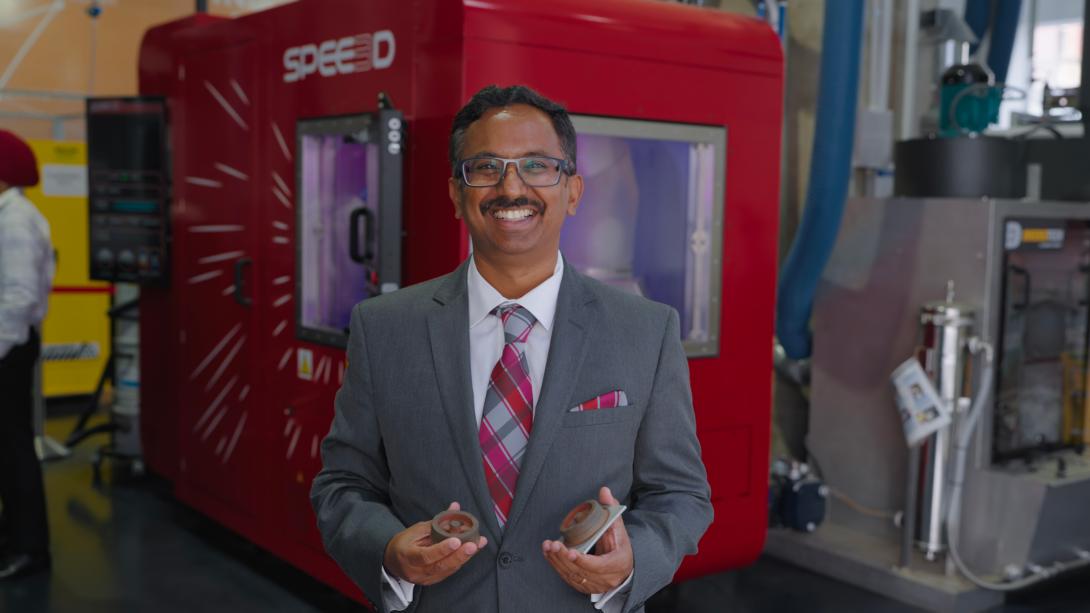
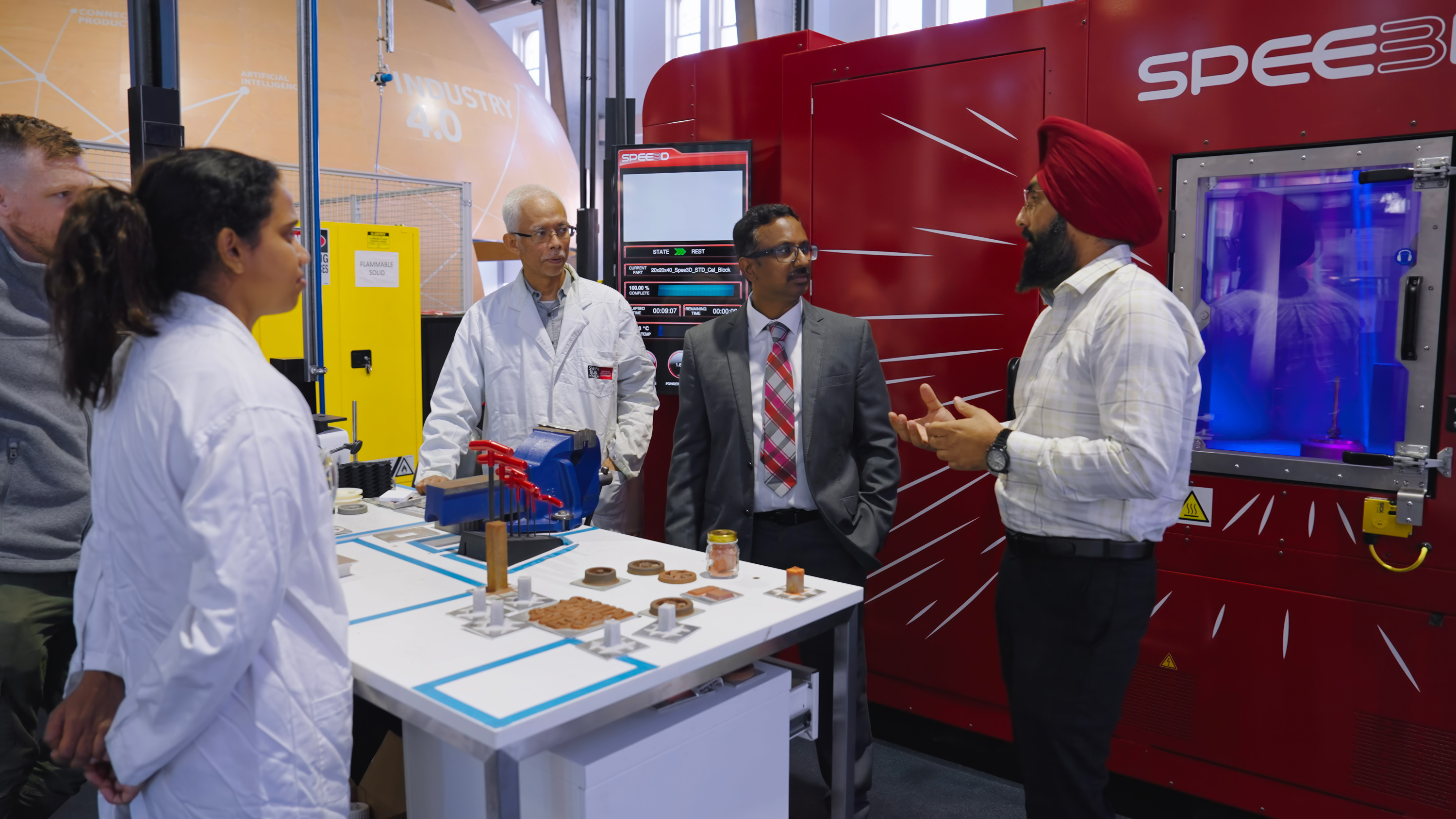
An innovative form of 3D printing developed in Australia is turning that vision into reality. Known as SPEE3D, this method uses compressed air to deposit hard-phase materials at four times the speed of sound. This enables critical components to be built rapidly, layer by layer, with minimal waste.
Recognising the technology’s potential, Professor Suresh Palanisamy from Melbourne’s Swinburne University of Technology is spearheading an initiative to introduce SPEE3D to India’s rapidly growing manufacturing sector. Supported by a Maitri Grant from the Centre for Australia-India Relations, the project aims to explore commercial applications, foster local industry partnerships, and promote sustainable manufacturing practices.

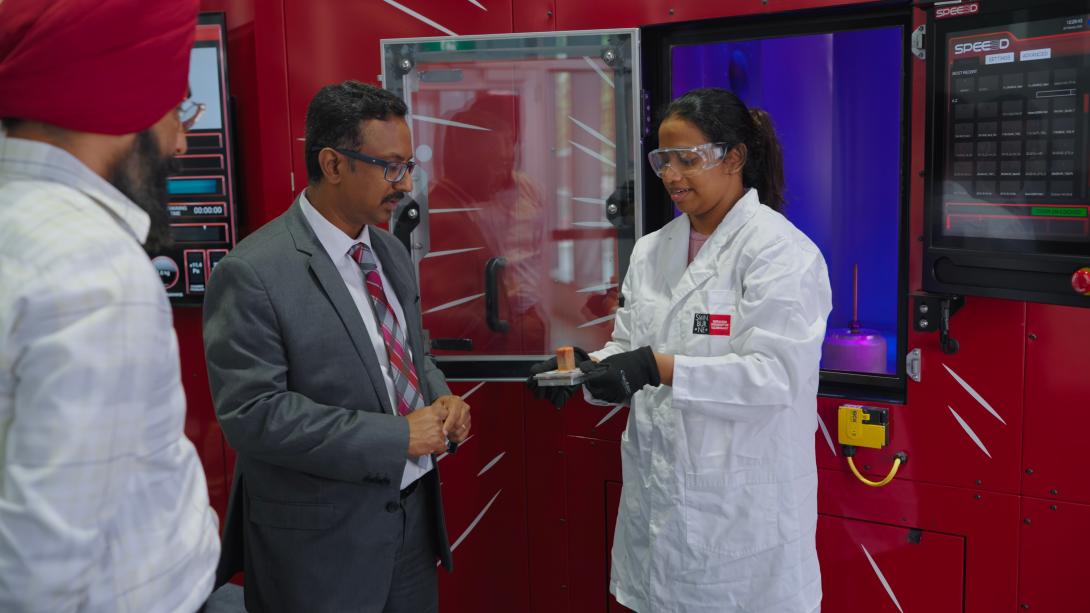
“By introducing Australian innovations such as SPEE3D’s metal additive manufacturing technology to India, we’re not just creating commercial opportunities—we’re actively helping to upskill local industries.”
Advancing Defence, Industry, and Sustainability
The practical applications of this technology are extensive. Industries such as aerospace, oil and gas, and defence can greatly benefit from producing and repairing metal parts directly at the point of need. The Australian Defence Force has successfully trialled the technology, with soldiers printing parts for armoured vehicles in the Northern Territory.
Beyond immediate repairs, the innovation offers substantial environmental benefits. By reducing the transportation of components over long distances and significantly cutting down on material waste, SPEE3D contributes to a more sustainable manufacturing process. Additionally, its cold spray method consumes considerably less energy than traditional additive manufacturing techniques, further bolstering its eco-friendly credentials.
Strengthening Australia-India Research Ties
For Professor Palanisamy, who was born in India and has built his academic career in Australia, this project is as personal as it is professional. “This is about building bridges,” he said. “I understand the needs of Indian industry and the strengths of Australian innovation. Bringing them together is incredibly satisfying.”
Research collaboration between Australia and India has surged in recent decades, driven by shared interests in technological advancement and economic growth. “The relationship between Australia and India in research and manufacturing has grown enormously, particularly over the last 20 years,” said Professor Palanisamy. “More Indian students are studying in Australia, more research partnerships are forming, and collaboration between our two nations is becoming increasingly close.”
The Maitri Grant has enabled Swinburne to host workshops in India, providing industry leaders and researchers with hands-on experience with the SPEE3D technology. “It’s not just about selling a product,” said Professor Palanisamy.
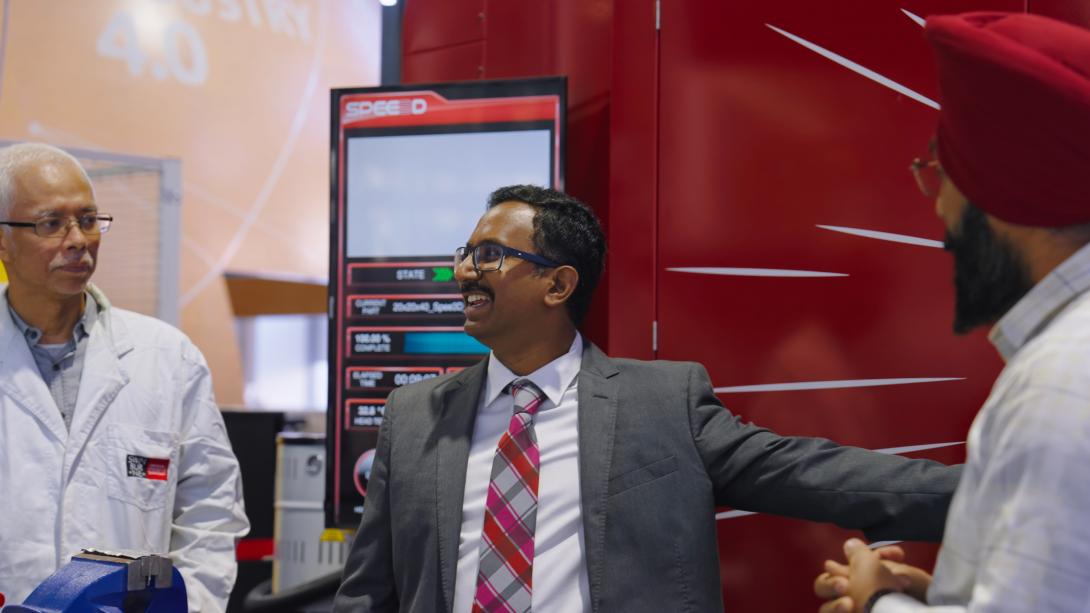
Professor Palanisamy believes this kind of collaboration is essential for the future of manufacturing. “The industry is shifting towards greater automation, digitisation, and sustainability. Australia offers cutting-edge technology, while India provides an enormous market and a skilled workforce. Together, we can lead the way in advanced manufacturing.”