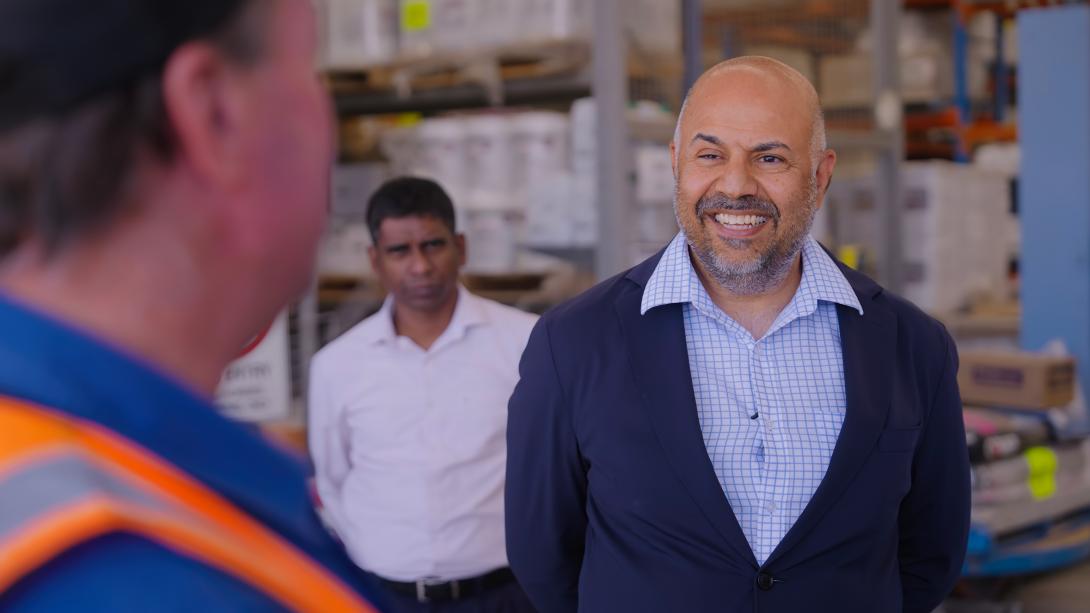
When you tear open a warm naan or pour a bowl of your favourite cereal, chances are you’re not thinking about the intricate journey each grain has made. But behind each bite is an invisible network—one often tangled in complexity.
The challenge of food tracability
Traceability in agriculture is crucial to ensuring food quality and safety, but tracking a crop’s journey from paddock to plate is no easy feat. When it comes to international trade, that journey is even more complex, and traditional traceability methods often fall short due to factors like fragmented supply chains and inconsistent data.
It’s a problem that caught the eye of Professor Harpinder Sandhu, a globally leading agricultural scientist. So, in 2020, he and his colleagues at Victoria’s Federation University Australia embarked on a mission to develop GrainSupp, an AI-driven blockchain tool designed to make end-to-end traceability across borders possible.

How blockchain technology works in agriculture
“Blockchain technology is like having a safe in a cloud platform,” he explained. “Whether it’s documents on grain quality or regulation or any other related information that’s essential for exporting grain from one port to another port… it uses crypto technology to safeguard this information, so it’s a fully secure system which can be used to share information between a buyer and a seller.”
And with support from the Centre for Australia-India Relations (CAIR), Professor Sandhu and his team are now extending this technology to India.
“When we developed GrainSupp for Australian conditions so that we could track and monitor our trade going from Australia to overseas markets, we did not look into smallholder farmers,” he said. “But we’re now able to test the capability of GrainSupp in Indian conditions where there are millions of smallholder farmers.”
Supporting India’s smallholder farmers
Agriculture accounts for about 15 per cent of India’s economy but Professor Sandhu said its smallholder farmers often face challenges with verifying grain quality.
“We’re trying to figure out how our tool can help smallholder farmers to increase value to their product and how they can get fair and better prices in the market,” he said. “My hope is that in a couple of years, we can launch this platform at a commercial level.”
Bridging the gap with farmers
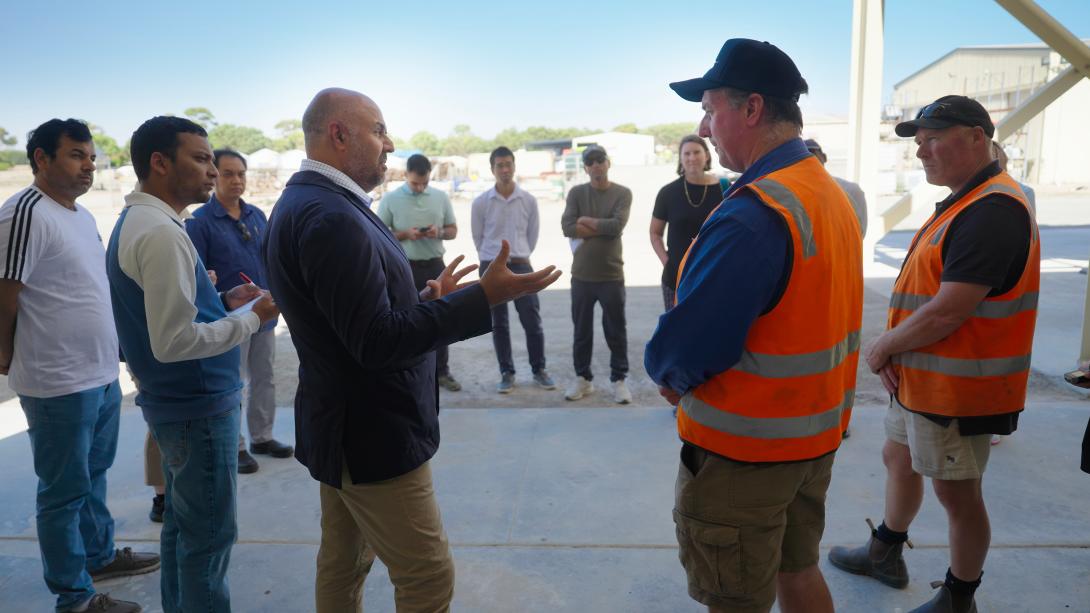
Beyond field trials in India, Professor Sandhu is also collaborating with rural businesses and councils in regional Victoria to better understand how farmers in Australia are growing their produce.
On a recent field trip to Lake Bolac, he brought along colleagues from across Australia, including CSIRO and the University of Adelaide.
“We are visiting Gorst Rural where Cam [the General Manager] and the team are working with about 400 different farmers, providing them with customised inputs, whether it’s seed, fertiliser or plant protection technologies,” said Professor Sandhu.
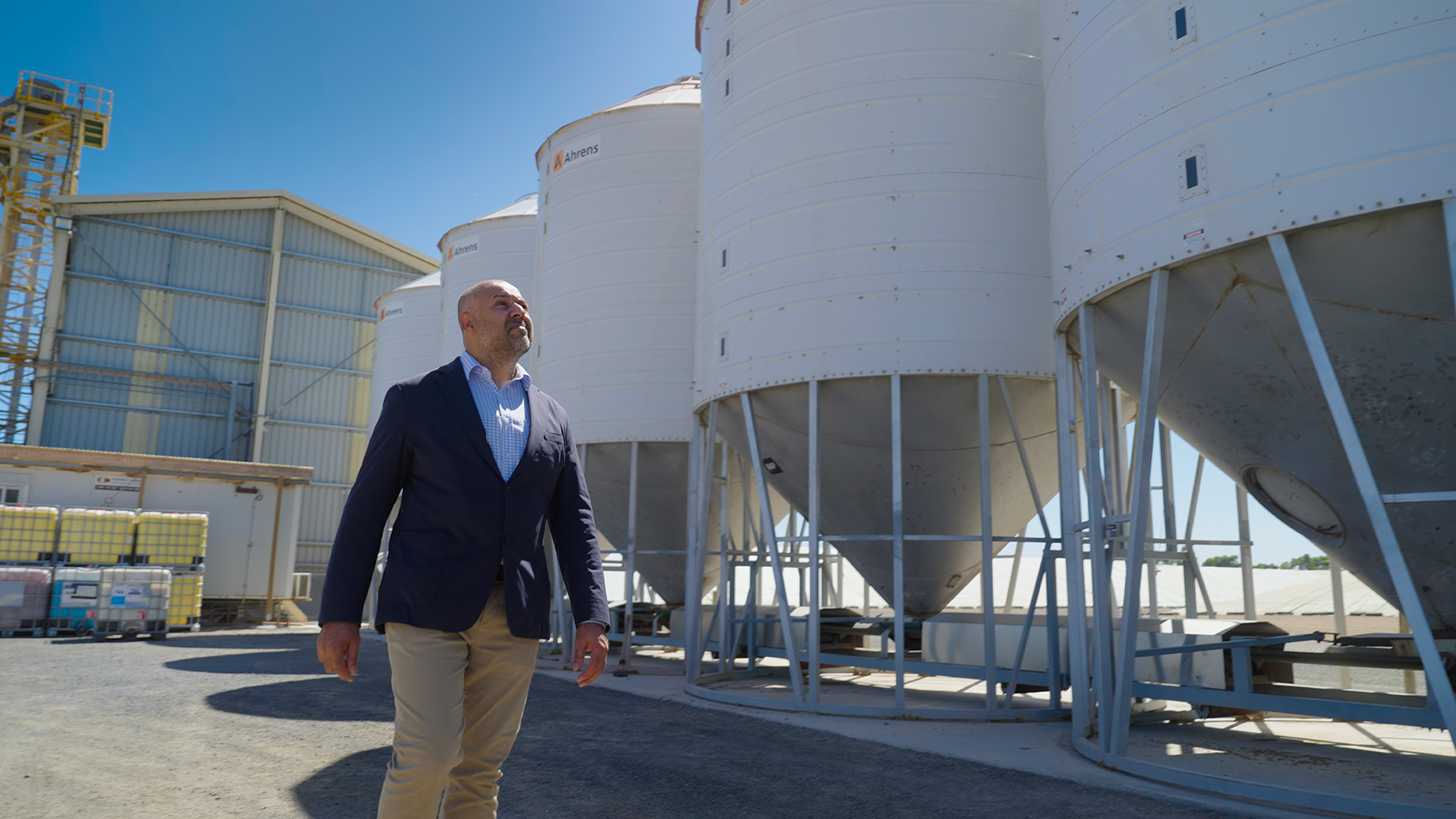
They also visited a grain handling facility to see how grain is received, handled, stored, and processed before it is shipped out. The information they gather about grain quality will prove crucial to further developing the GrainSupp tool and ensuring its application in the real world.
Recipe for a strong partnership
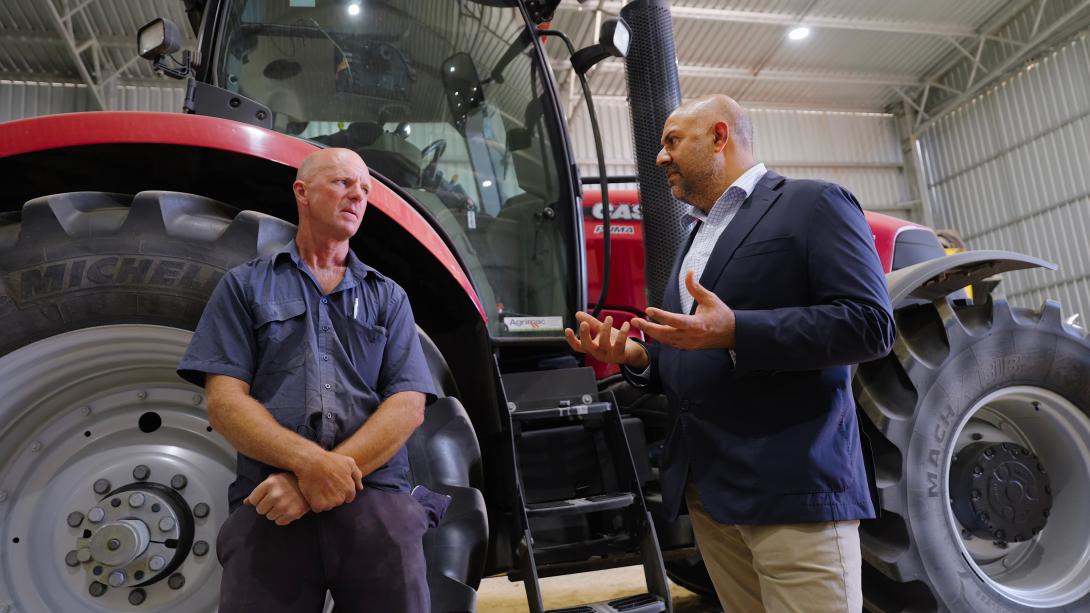
Professor Sandhu, who grew up on a farm in India, sees a lot of potential for Australia-India collaboration in agriculture.
“There’s so much opportunity for businesses, especially AgTech and agribusiness, because the growing population base in India demands more food and different types of food, and in Australia, the majority of our food commodities are exported,” he said.
“I think if the two governments can come together, there is a great opportunity to supply food in the Indian market and that way, both countries will benefit.
“It will not only strengthen the economy for Australia but also help secure food security for India.”
Beyond trade: shared values and vision
But the connection between the two countries extends beyond trade. Australia is home to one of the world’s largest Indian diasporas, many of whom live and work in Victoria, like Professor Sandhu.
“Australia and India share similar values – democracy, justice, fairness,” he said.
“This project can contribute to strengthening research and economic ties between Australia and India.”