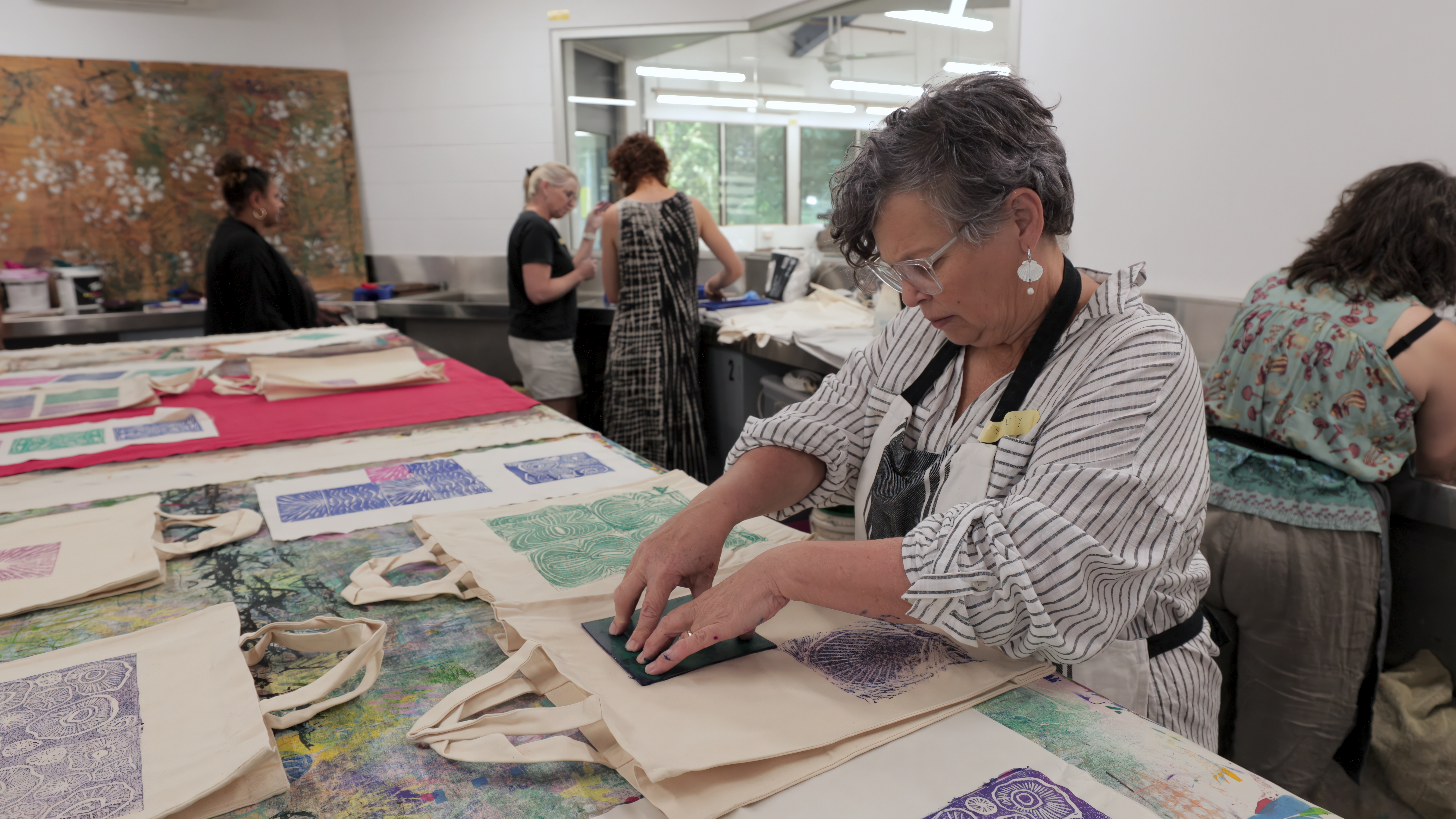
In Arnhem Land’s hot tropical climate, even sacred art isn’t immune to the elements.
Preserving cultural legacies for future generations
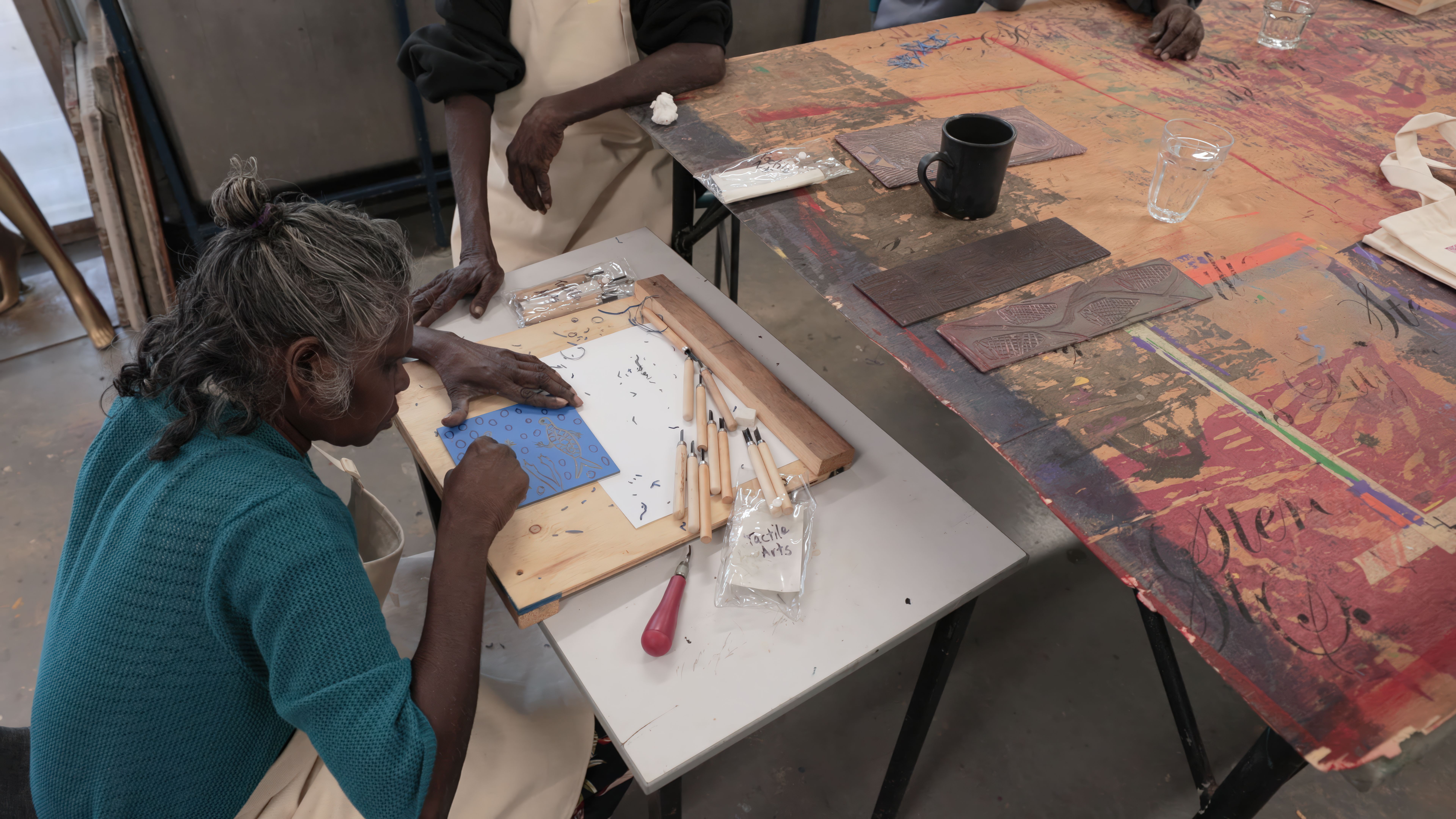
For decades, Indigenous artists at the Bábbarra Women’s Centre in Maningrida, Northern Territory, have used lino printing to preserve their ancestral stories on textiles.

But as the lino prints started to decay in the humidity, the community faced an urgent question – how to preserve these cultural legacies for future generations.
Their search led them to an unlikely partner halfway across the world: Tharangini Studio. There, in one of the oldest surviving woodblock print studios in Bangalore, India, artisans have been mastering a very different printmaking tradition for over half a century.
A meeting of two traditions
With support from the Centre for Australia–India Relations’ (CAIR) Maitri program, the two women-led studios began an ambitious collaboration.
Together, they translated more than 70 lino designs from Bábbarra’s archives into hand-carved woodblocks. Each design was carefully traced onto paper, sent across continents for approval from the original artists and their cultural custodians, and then carved in seasoned teak by Tharangini’s artisans.
“The whole project started in a way of preserving cultural legacy using a new medium of woodblock, which of course has been tried and tested in India over many centuries,” said Tharangini’s director Padmini Govind. “We have woodblocks that are more than 100 years old in our archives, which we use even today.”
Govind added that the weather similarities between Bangalore and Maningrida offered extra reassurance that these collaborative pieces would “withstand the test of time”.
Working together across languages
The project Karri-djarrk-durrkmirri – meaning “we work together” in Kuninjku language – is more than an act of preservation. It’s also about building bridges between two geographically distant communities who’ve found a way to connect through craft.
“English is a third, fourth language for us, as it is for the ladies of Bábbarra. We felt that we didn't really need that spoken, verbal exchange. It was all artists working with artisans and creating this textile format,” said Govind.
In 2023, senior Bábbarra artists, Deborah Wurrkidj and Janet Marawarr, travelled to India for the first time.
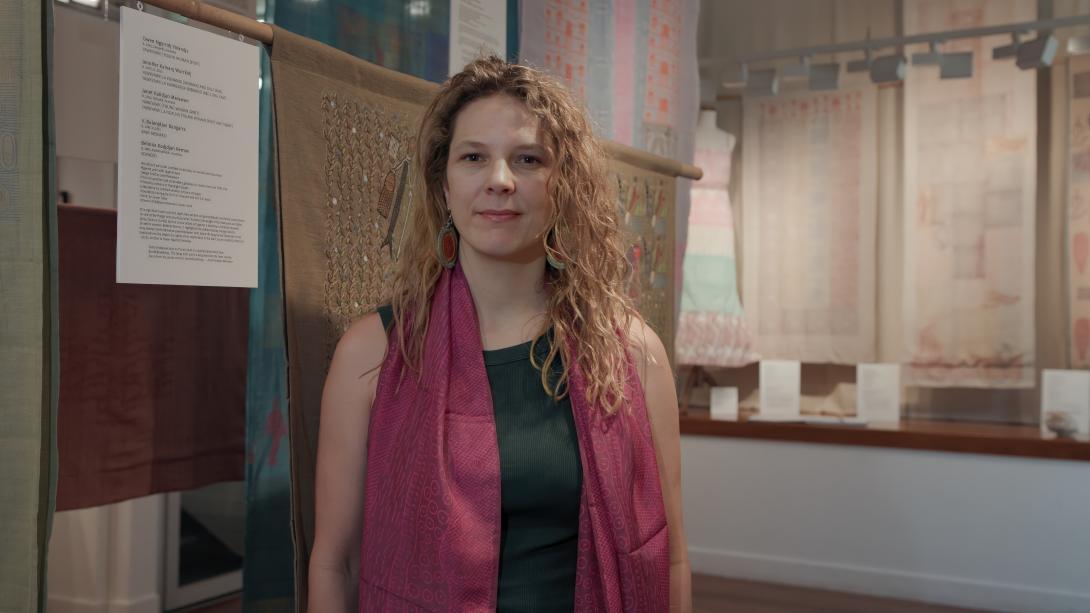
The following year, with CAIR’s support, a larger Bábbarra delegation returned to India. This time, the group included artists Raylene Bonson and Abigail Namundja, model and influencer Cindy Rostron, assistant manager Ziian Carey, and manager Jessica Stalenberg. The same grant also enabled Tharangini’s director, Padmini Govind to travel to Maningrida to deepen the cultural exchange.
Govind says the workshops with the Bábbarra women were nothing short of “magical”.
“We had only heard about their family legacies and family stories through looking at the woodblock designs. But when they explained [those stories] firsthand, for example, ‘What is Rainbow Serpent? What is the significance of that?’ … it was an eye-opening experience, and one that really was very memorable for all of us on the team,” she said.
From Maningrida to the world
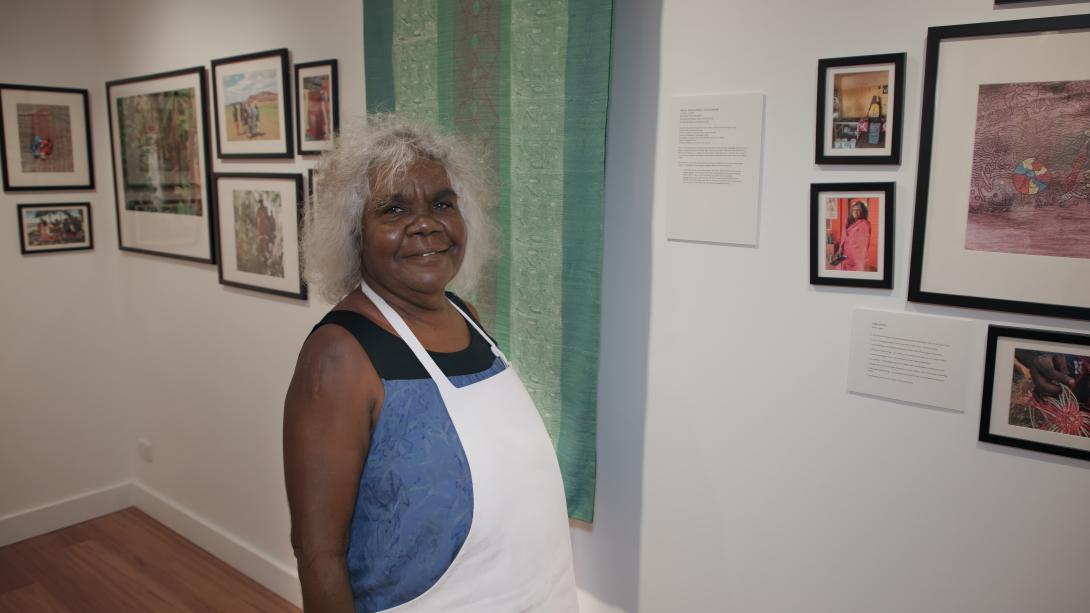
The collaboration led to a joint exhibition at the Bangalore International Centre in 2024, featuring 21 hand-printed woodblock textiles made with natural dyes and sustainably sourced fabrics and a photo wall explaining the cross-cultural process.
In 2025, the exhibition travelled to Northern Territory, returning the works and stories back home.
“Maningrida has its own museum which is community-led and some of the blocks and the lino will go into that collection so that future generations can refer back to the work that was done,” Stalenberg said.
The project’s impact has since been recognised with an Asia Pacific Arts Innovation Award as an exemplary project that builds creative links in the region.
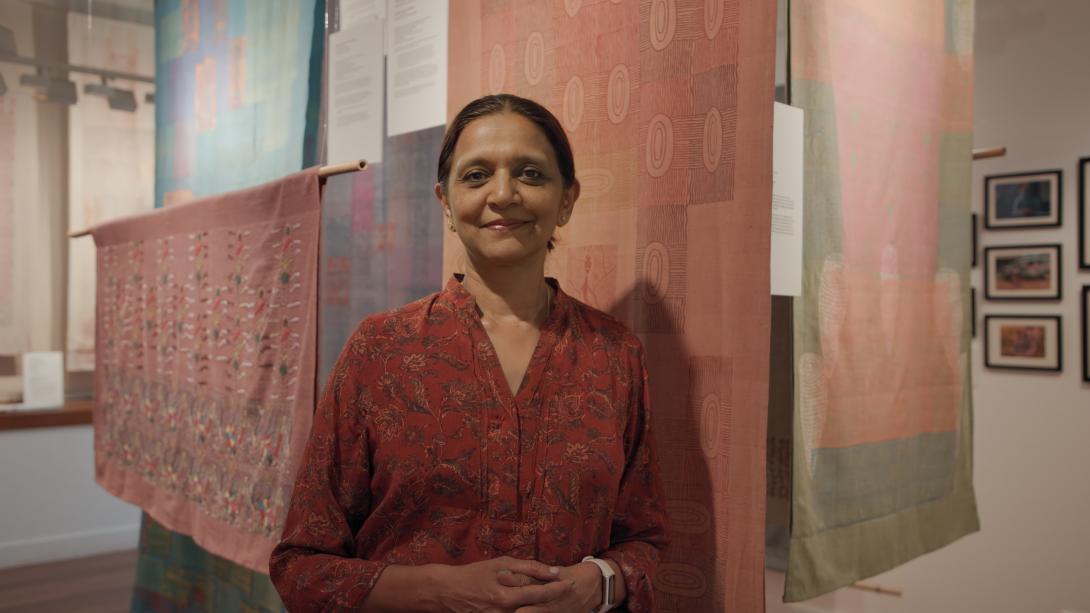
“A similarity between Bábbarra Women’s Centre and Tharangini Studio is that we both preserve culture and it’s intergenerational,” Stalenberg added. “Both the centres want their children and the next generation to still have hold on their stories and to be able to share them visually. This project helps to protect that.”