When Indian artist Raja Ravi Varma began printing images of Hindu gods and epics in the late 19th century, he revolutionised access to art – and to divinity itself.
Bringing India’s Most Influential Artworks to Life in Brisbane
For the first time, these images entered homes and businesses across India, shaping the way generations would come to visualise their faith and identity.
Now, more than a century later, his legacy is being celebrated in Brisbane, with support from the Centre for Australia-India Relations (CAIR) through one of its largest cultural grants to date.
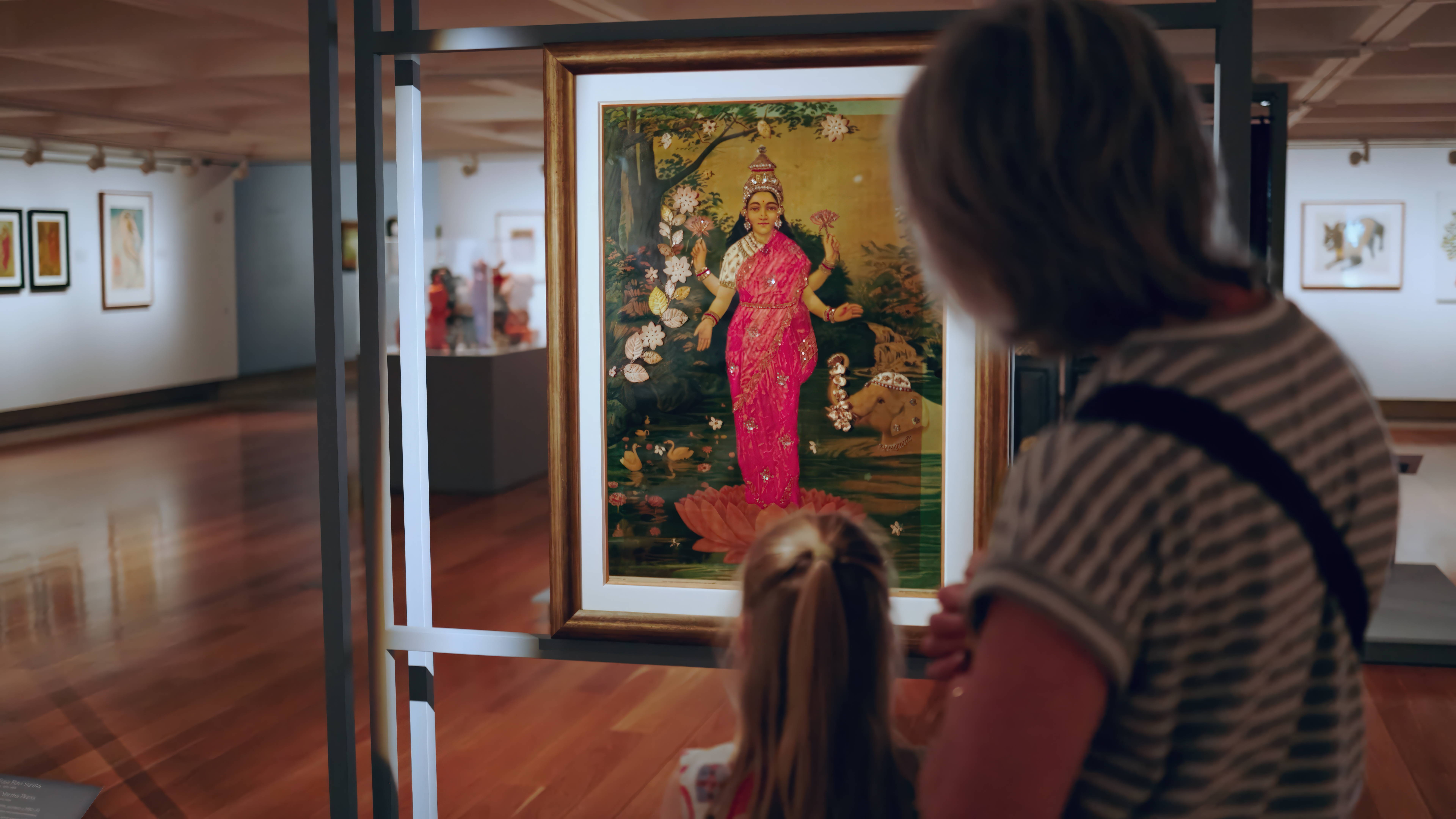
At the Queensland Art Gallery | Gallery of Modern Art (QAGOMA), a major project has been underway to conserve 48 of Ravi Varma’s oleographs – chromolithographic prints varnished to resemble oil paintings, many adorned with Zardozi embroidery or Bundaki embellishments.
A number of the conserved artworks are on display at QAGOMA in an exhibition titled ‘The God of Small Things: Faith and Popular Culture’.
Tarun Nagesh, Curatorial Manager of Asian and Pacific Art at QAGOMA, describes Ravi Varma as “the most influential Indian artist of all time”.

Before Ravi Varma, religious imagery was largely confined to temples and the royal courts, so accessible only to certain groups. But his prints transformed that exclusivity.
“This [wide distribution] gave the Indian people a way to celebrate their gods, to be able to worship them in their home,” Nagesh said. “And his impact on contemporary visual culture really continues today.”
Preserving a fragile legacy
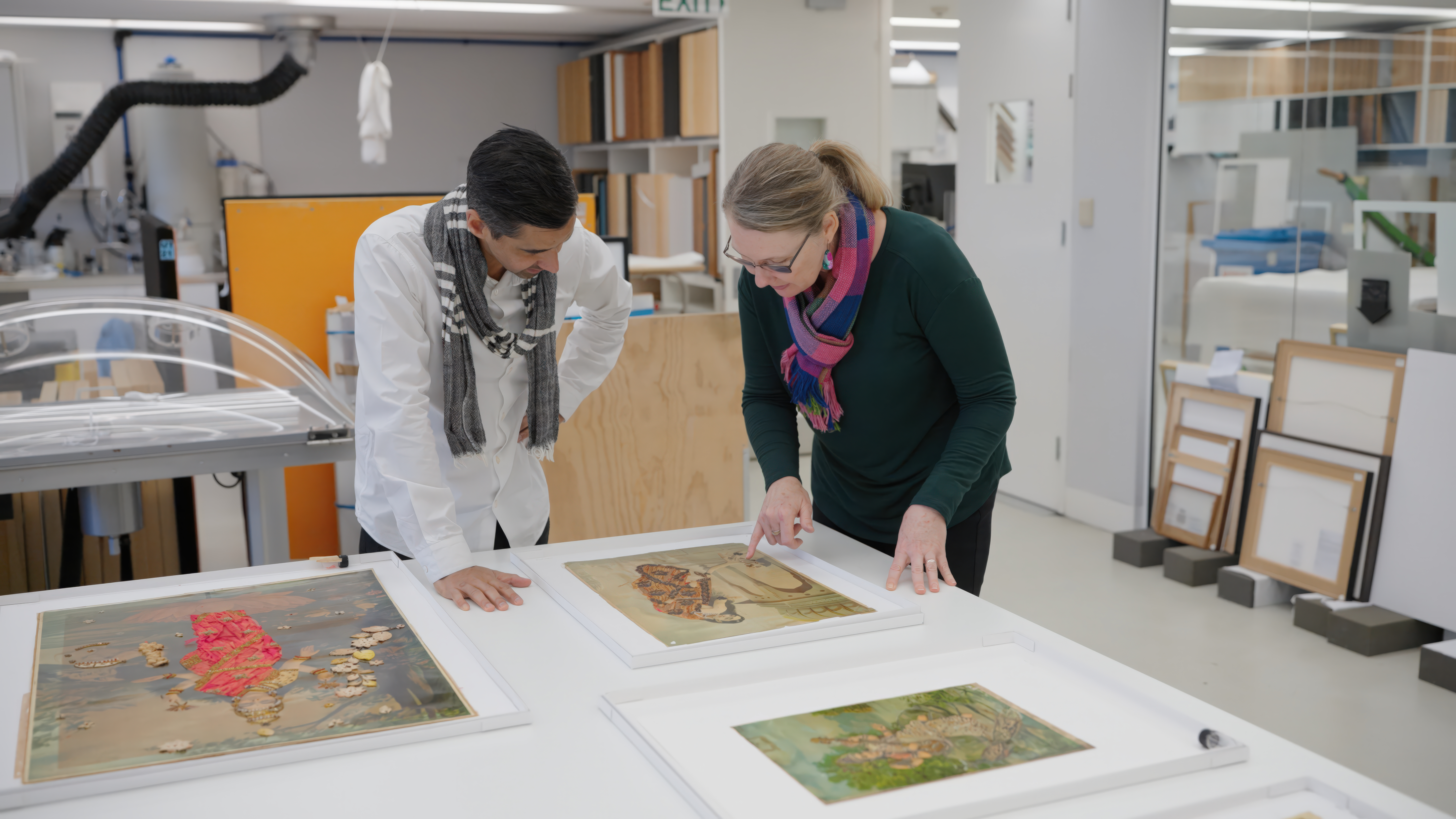
QAGOMA’s conservation work was both delicate and ambitious. Many of the century-old prints showed signs of age and use – including tears, losses, discolouration and staining from previous mould growth or adhesive tapes.
“We documented all of the works, unframing them, photographing them, looking at them under ultraviolet light and raking light to look at the surface topography and to determine what sort of damage and deterioration these artworks exhibit,” said QAGOMA Conservator, Kim Barrett.
The process drew on expertise across disciplines, with specialists in paper, textiles and sculpture working together to conserve the oleographs’ complex layers of ink, silk and sequins.
Barrett emphasised that their work lies in conservation rather than restoration.
“We’re stabilising the artwork. We’re not trying to restore it to how it originally looked,” she said. “Everything that we do in conservation, we aim to be reversible, so that if someone comes along in the future, they can reverse the treatment that we’ve undertaken.”
A cross-cultural collaboration
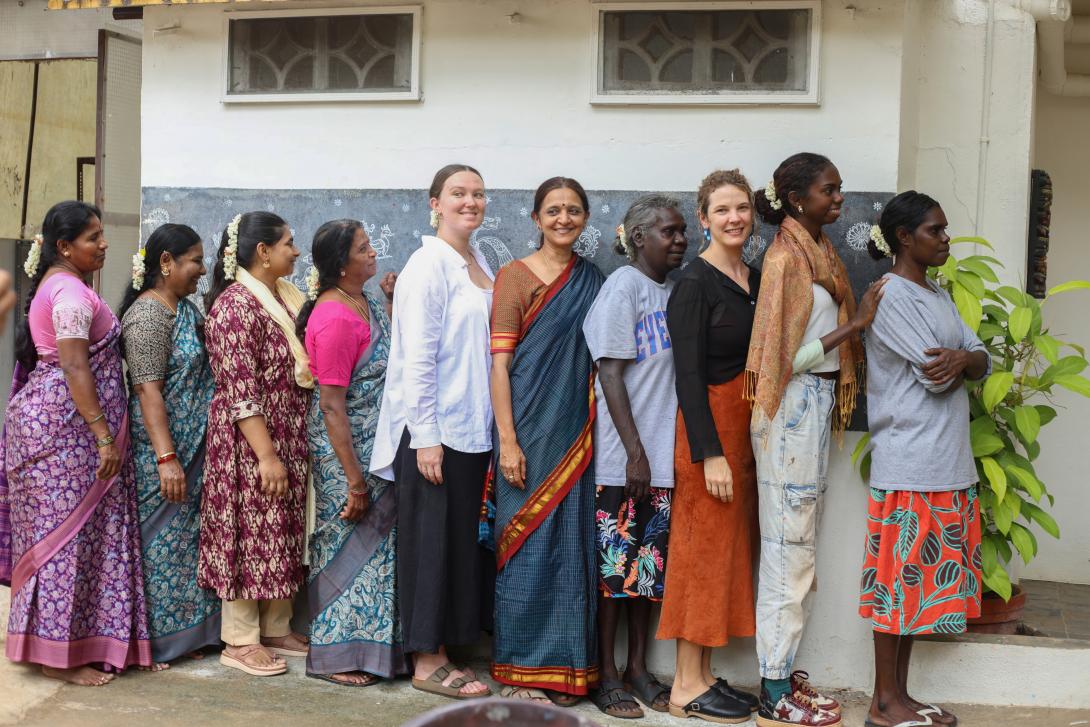
Across borders, QAGOMA is also partnering with conservators at the Museum of Art and Photography (MAP) in Bengaluru, India, to share skills and approaches to the care of Ravi Varma’s works.
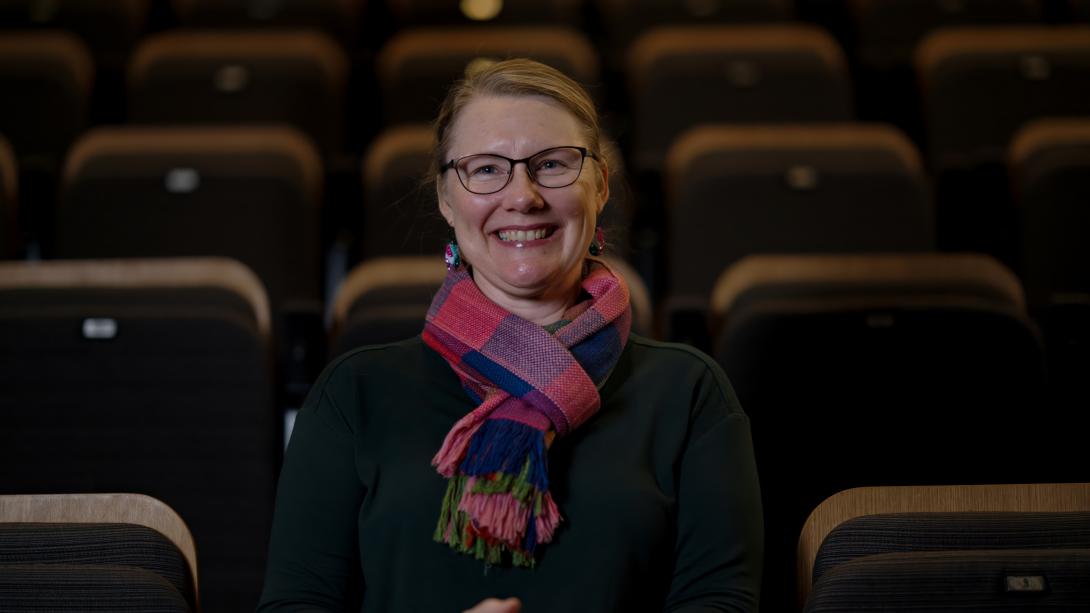
As part of the exchange, QAGOMA conservators are travelling to India to visit MAP’s conservation lab and take part in workshops, while MAP’s team is also journeying to Brisbane to experience QAGOMA’s methods firsthand.
Through this collaboration and the exhibition of the conserved works at QAGOMA, Nagesh says the project not only preserves an important chapter of Indian visual history but also opens a dialogue between cultures.
“I think that’s such a fantastic opportunity to celebrate an Indian artist that the Indian diaspora will really respond to,” he said. “But of course, this is an artist who is still so unfamiliar in Australia even though his influence is really unrivalled in India. So, this is a really important chance to be able to share the life and work of Ravi Varma … to diverse audiences in Australia.”